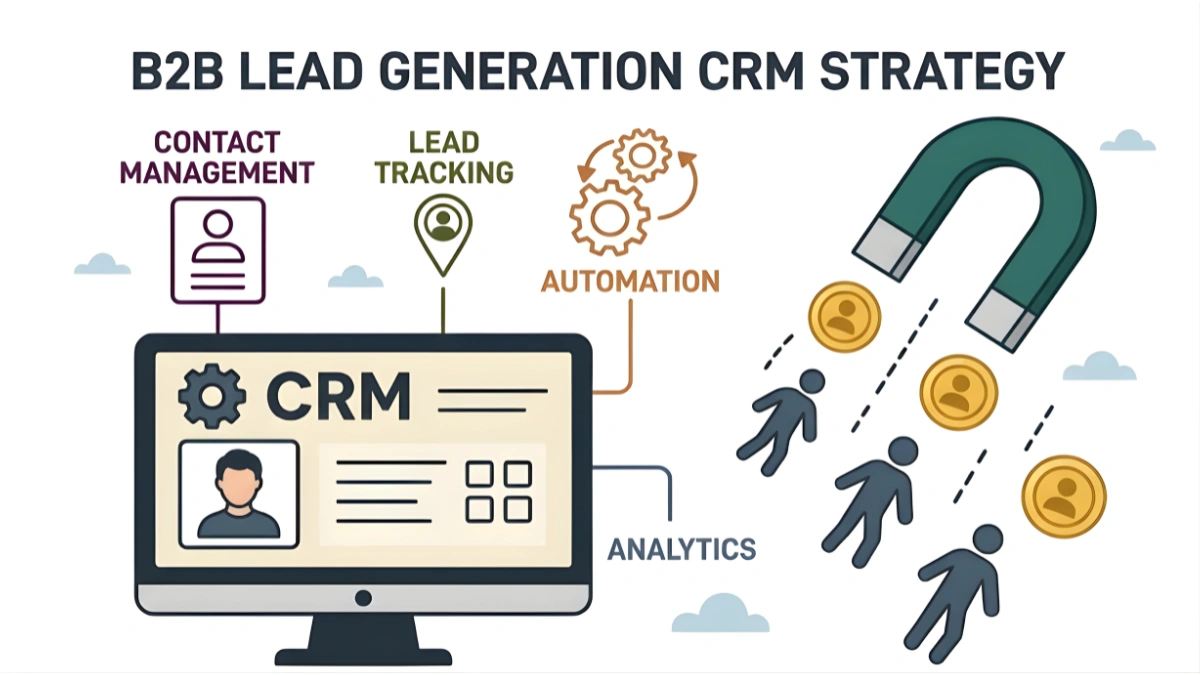
B2B lead generation has grown significantly more complicated as today’s buyers engage across numerous channels before reaching a purchase decision. Businesses can no longer depend on spreadsheets or fragmented sales tools, since lead quality, follow-up timing, and customer tracking now have a direct impact on revenue growth. CRM software has emerged as a necessity, helping businesses consolidate prospect data, automate outreach, and boost conversion efficiency throughout extended sales cycles.
For organizations pursuing high-value B2B sales, CRM platforms now serve a critical function in bridging the gap between marketing and sales teams, enhancing pipeline visibility, and pinpointing which leads warrant immediate action. It is increasingly clear that CRM is no longer a luxury in B2B lead generation, as automation, scoring, and data transparency now determine which businesses turn leads into customers most effectively.
Why CRM Is Essential for B2B Lead Generation
B2B sales typically involve several decision makers, extended discussions, and multiple rounds of follow-up.
CRM enables businesses to handle this complexity by bringing all lead activity into a single system.
Main advantages include:
- Lead data in one place
- Communication history visibility
- Automated reminders
- Better team coordination
- Reduced lead leakage
This drives greater consistency throughout the sales funnel.
How CRM Improves Lead Quality
Not every lead warrants the same level of attention.
CRM systems allow businesses to distinguish high-potential prospects from low-value inquiries.
This happens through:
- Lead scoring
- Engagement tracking
- Source analysis
- Behavioral monitoring
Sales teams can then concentrate their efforts on the most promising opportunities.
Top CRM Platforms Commonly Used for B2B Lead Generation
| CRM Platform | Best For | Key Features | Pricing |
|---|---|---|---|
| HubSpot CRM | Inbound B2B lead management | Lead capture, email automation, reporting | Free / Paid tiers |
| Salesforce Sales Cloud | Enterprise B2B sales | AI scoring, analytics, automation | $25+/user |
| Zoho CRM | Affordable startup CRM | Multi-channel lead capture, scoring | $12+/user |
| Freshworks Freshsales | AI-powered sales teams | Lead scoring, email tracking | $15+/user |
How CRM Strengthens Lead Nurturing
Many B2B transactions take weeks or even months to finalize.
CRM enables businesses to stay engaged with prospects at every stage of the process.
This improves nurturing through:
- Automated email sequences
- Follow-up reminders
- Personalized communication timing
This helps prevent valuable opportunities from slipping through the cracks.
Why Sales and Marketing Alignment Improves with CRM
Without CRM, responsibility for lead ownership can quickly become ambiguous.
CRM platforms foster alignment by giving both teams shared visibility into:
- Lead source
- Engagement history
- Sales stage
- Campaign performance
This accelerates the speed of decision-making.
Pipeline Visibility Matters in B2B Sales
A well-configured CRM reveals precisely where each prospect stands within the funnel.
Businesses gain an advantage because they can rapidly spot:
- Delayed deals
- Active opportunities
- Weak lead sources
This leads to more accurate forecasting.
AI in Modern B2B CRM Systems
AI has taken on a growing role in CRM functionality.
Modern CRM platforms now support businesses through:
- Predictive lead scoring
- Suggested follow-ups
- Conversion forecasting
This empowers sales teams to make smarter prioritization decisions.
How Businesses Successfully Implement CRM for Lead Generation
A successful CRM implementation typically starts with:
- Defining lead sources
- Setting scoring rules
- Building clear pipelines
- Connecting marketing tools
This lays the groundwork for stronger CRM performance over time.
Future CRM Trends in B2B Lead Generation
A number of key developments are gaining momentum.
Main trends include:
- Multi-channel lead capture
- AI qualification models
- Real-time intent tracking
- Deeper automation
These trends are actively reshaping the landscape of modern B2B selling.
FAQs
1. Which CRM is best for B2B lead generation?
HubSpot and Salesforce continue to be among the most widely preferred options.
2. Is CRM useful for startups?
Absolutely, with budget-friendly platforms like Zoho offering strong value.
3. Does CRM improve conversion rates?
Yes, particularly through the use of lead scoring and automated follow-ups.
4. Can CRM connect with LinkedIn and email tools?
The majority of modern platforms offer this kind of integration.
5. Is AI important in B2B CRM now?
It is becoming increasingly vital, particularly when it comes to lead prioritization.
Conclusion: CRM software has become indispensable for B2B lead generation, as lead quality, timing, and communication consistency now have a direct bearing on sales outcomes. Businesses that use CRM strategically tend to convert more prospects, gain clearer visibility into their sales pipeline, and build more effective long-term customer acquisition processes.
Disclaimer: This article is intended for informational purposes only. CRM pricing, lead generation capabilities, and software features may vary based on vendor updates and subscription plans. Businesses are encouraged to confirm official product details before choosing a CRM platform.