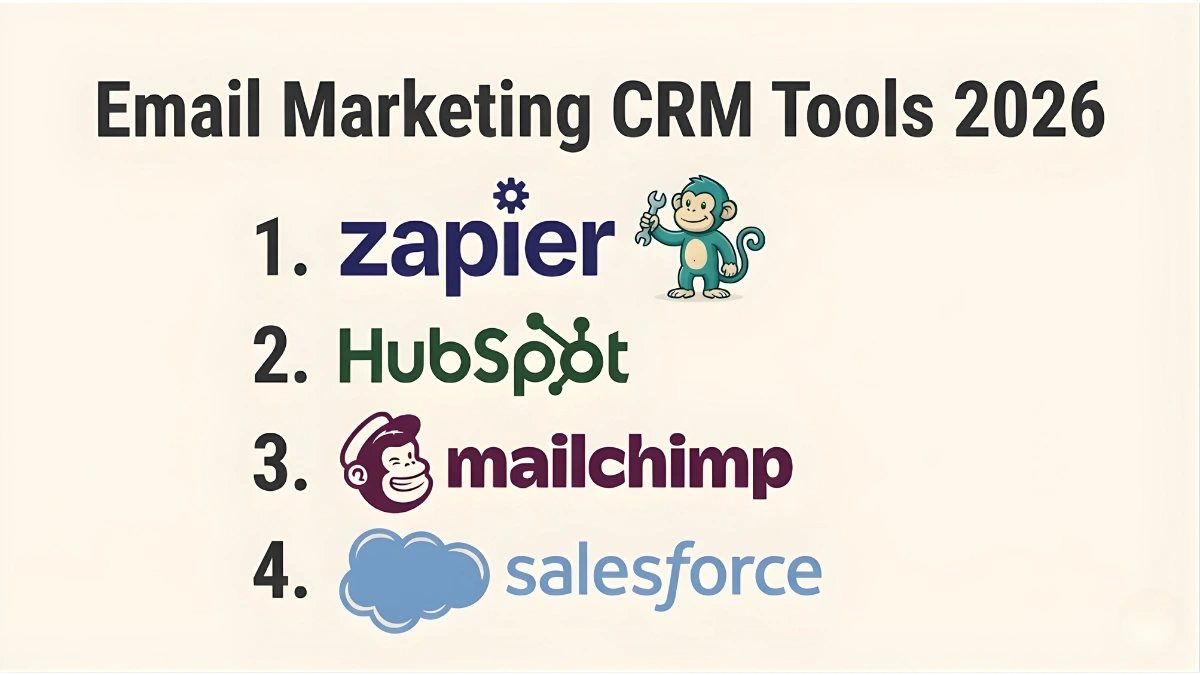
Email marketing continues to generate strong business outcomes because it remains one of the most dependable channels for nurturing prospects, boosting repeat engagement, and driving higher conversion rates. However, email campaigns become significantly more powerful when linked directly to CRM software, enabling businesses to leverage live customer data, behavioral patterns, and sales activity to deliver more relevant messaging.
CRM and email integration enables businesses to automate customer journeys, sharpen targeting precision, and evaluate campaign performance in much greater depth. It is clear that businesses using connected CRM and email systems now depend heavily on automation, segmentation, and real-time reporting to enhance both engagement and long-term customer value.
Why Email Marketing Works Better with CRM
Email campaigns grow stronger when customer records are tied directly to marketing activity.
CRM enhances this because businesses can access:
- Customer preferences
- Purchase history
- Engagement records
- Lead stage information
This enables campaigns to align with customer behavior far more accurately.
How CRM Improves Email Personalization
Generic campaigns tend to lose audience attention rapidly.
CRM makes personalization achievable by drawing on live customer data.
Businesses can personalize:
- Subject lines
- Product offers
- Follow-up timing
- Customer recommendations
This typically leads to improved open and response rates.
Top CRM Platforms with Strong Email Marketing Integration
| Platform | CRM + Email Integration | Key Features | Best For |
|---|---|---|---|
| HubSpot CRM | Native email automation | Lead tracking, workflows, analytics | SMEs and growing businesses |
| Salesforce + Pardot | Enterprise email automation | Lead nurturing, scoring, analytics | Enterprise B2B marketing |
| Zoho CRM + Campaigns | Native integration | Automated campaigns, A/B testing | SMEs |
| ActiveCampaign | Built-in CRM + email | Behavioral automation, segmentation | Online businesses |
Why Automation Increases Email ROI
Automation enables businesses to deliver communication at precisely the right moment without requiring manual effort.
CRM-connected automation supports:
- Welcome sequences
- Follow-up campaigns
- Abandoned lead reminders
- Re-engagement emails
This enhances overall consistency.
Segmentation Makes Campaigns More Effective
CRM segmentation allows businesses to organize customers in a meaningful way.
Common segmentation types include:
- Purchase behavior
- Engagement level
- Demographics
- Lead value
This sharpens overall campaign precision.
Why Sales Teams Benefit Too
Email integration is not exclusively for marketing departments.
Sales teams also gain advantages because CRM reveals:
- Which emails were opened
- Which links were clicked
- Which leads are active
This helps improve the timing of outreach efforts.
Analytics Become Stronger with CRM Integration
Businesses gain clearer visibility because CRM tracks the impact of campaigns more effectively.
Important metrics include:
- Open rates
- Click rates
- Conversion rates
- Lead movement
This supports stronger decision making.
Best Practices for CRM + Email Strategy
Businesses typically see better results when they:
- Keep databases clean
- Update segments regularly
- Test email timing
- Improve subject lines
These steps reinforce long-term performance gains.
Why GDPR and Compliance Matter
Email campaigns are increasingly subject to rigorous compliance requirements.
CRM helps businesses manage:
- Consent records
- Opt-out preferences
- Data storage controls
This is particularly important for businesses operating across multiple regions.
FAQs
1. Which CRM is best for email marketing?
HubSpot and ActiveCampaign continue to be widely favored choices.
2. Is CRM email automation expensive?
Many platforms provide budget-friendly entry-level options.
3. Can small businesses use CRM email tools?
Yes, Zoho and HubSpot are well suited for smaller operations.
4. Does segmentation improve email performance?
Yes, precisely targeted campaigns tend to deliver stronger results.
5. Is CRM email tracking useful for sales?
Yes, it meaningfully improves the timing of sales outreach.
Conclusion: CRM and email marketing integration has grown increasingly essential as businesses rely on automation, personalization, and customer behavior insights to drive engagement and conversions. Organizations that effectively combine both systems tend to build stronger customer journeys and achieve greater overall marketing efficiency.
Disclaimer: This article is intended for informational purposes only. CRM pricing, email integration capabilities, and software features may vary based on vendor updates and subscription tiers. Businesses are encouraged to review official product information before choosing a platform.